Sustainable Food Processing with High-Pressure Technology
High-pressure processing (HPP) is emerging as one of the most effective methods for sustainable food preservation. It provides an alternative to ultra-high heat or the use of synthetic additives, helping preserve fresh food and extend refrigerated shelf life while effectively deactivating pathogens.
By reducing energy consumption, water use, and food waste, HPP helps premium food and beverage brands meet both sustainability goals and food safety requirements.
Fresh food has a short window. Highly perishable products spoil in days, which means stores discard what does not sell in time, and customers discard what they do not eat in time.
ReFED, a U.S. nonprofit focused on reducing food waste, maintains a detailed dataset on U.S. food waste and put total U.S. surplus food at 70 million tons in 2024, roughly 29% of the entire food supply.
Households are the single largest source at 33.5%. ReFED also finds consumers manage prepared foods reasonably well but struggle with fresh products, which are harder to keep. The cost lands on them directly: $762 per person per year on food that ends up thrown away.
Grocery retailers generated 3.98 million tons of surplus food in the same year. The two largest causes were concerns over freshness date labels (45.8%) and spoilage (18.7%). Together they account for nearly two-thirds of retail surplus, and both are set by shelf life. Roughly a quarter of that surplus went to landfill or incineration.
Fresh products treated with HPP last weeks or months longer than comparable products that have not undergone HPP or thermal pasteurization, reducing spoilage and the amount of food sent to landfills. How far refrigerated shelf life can be extended depends on the product.
A peer-reviewed study of vacuum-packed cooked meat products found substantial refrigerated shelf-life gains with HPP. Samples processed at 600 MPa (roughly 87,000 psi) showed shelf-life increases of five to eight times compared with untreated product under models of microbial and sensory deterioration. The study connects those gains directly to reduced product loss and waste.
HPP-treated product also retains its appearance and texture far better than untreated fresh product. Untreated product that no longer looks fresh gets pulled from the shelf whether or not it is still safe.
Product has more time to sell before its date, and once it leaves the store it has more time to be eaten before it turns. For retailers, longer shelf life also reduces shrink.
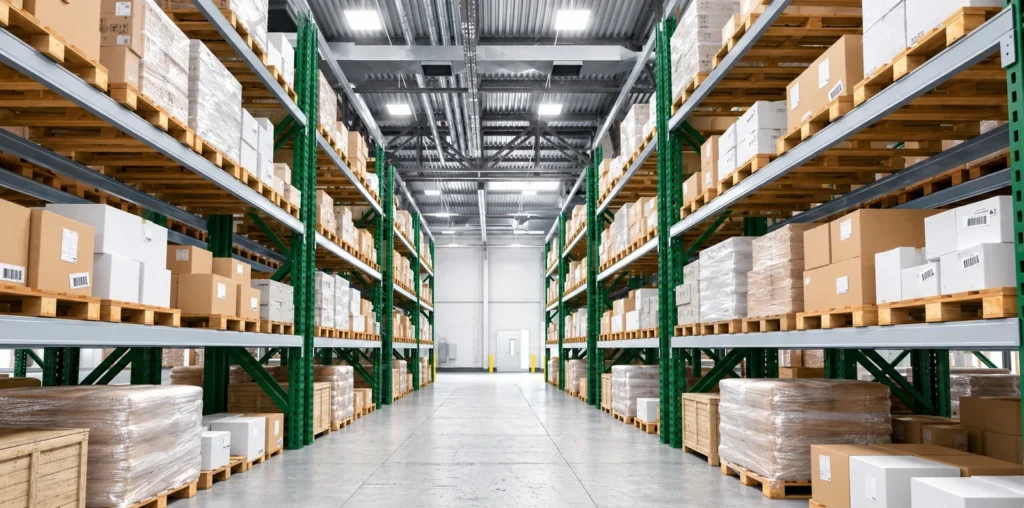
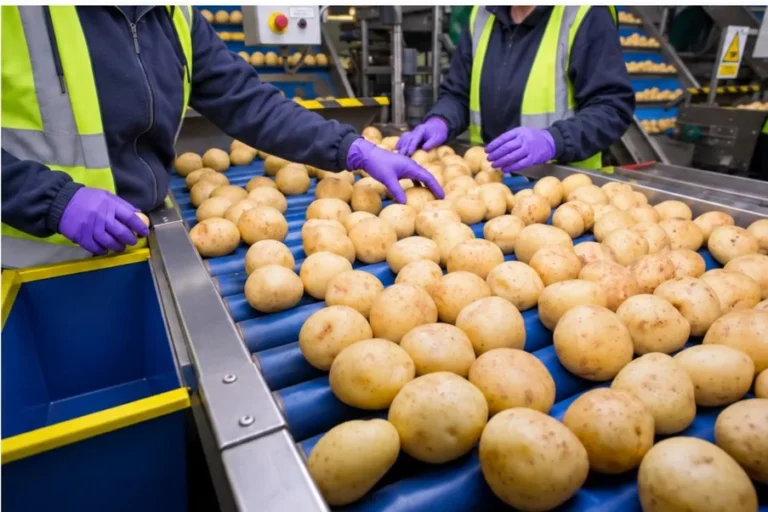
When food reaches a landfill, everything spent getting it there is spent for nothing. The water and land that grew it. The labor that harvested it. The energy that cooked, filled, and sealed it. The container and film that packaged it. The fuel that moved it. The refrigeration that held it at temperature from the plant floor to the retail case, running the entire time it sat on the shelf.
According to the EPA, food is the single largest material sent to U.S. landfills, roughly 24% of landfilled municipal solid waste. Reducing food waste decreases the volume sent to landfills, helping extend existing landfill capacity and reduce pressure to develop additional disposal sites.
Food waste in landfills decomposes under anaerobic conditions and produces methane, a greenhouse gas the EPA estimates has 27 to 30 times the 100-year warming potential of CO₂.
Decomposing food waste contributes contaminants to leachate, the liquid that forms as water moves through buried waste. If landfill containment systems fail, leachate can seep into groundwater and waterways, where ammonia and other contaminants can pose serious risks to water quality and aquatic life.
Unlike other nitrogen compounds, ammonia is directly toxic to aquatic life. At elevated concentrations, fish and aquatic organisms cannot excrete it quickly enough, and it accumulates in their tissue and blood.
Reducing food waste also helps lower pest-related health risks, as landfills attract rodents and insects that can spread disease.
Cold water + pressure = lower energy use. Depending on the product and processing setup, HPP can use far less energy than heat pasteurization because it does not require sustained high temperatures. HPP systems reuse water across cycles, minimizing water waste, reducing total water consumption, and improving overall efficiency.
According to U.S. Department of Energy analysis, container-glass melting and refining occur at approximately 2,732°F (1,500°C). Melting a ton of glass takes at least 2.2 million Btu, and real furnaces consume substantially more, with melting alone accounting for the majority of energy use in glass production.
PET is formed at lower temperatures than glass, which can reduce the fuel use, emissions, and costs associated specifically with forming the container.
A peer-reviewed life cycle assessment compared glass and recycled PET packaging across three distribution markets. An empty glass bottle weighed more than seven times its PET equivalent.
Glass breaks during filling, transit, and shelving. Every break is both a lost product and a wasted set of inputs. Plastic’s durability protects product integrity and reduces waste.
Fragility is priced into every pallet whether or not a bottle actually breaks. In the same life cycle assessment of extra-virgin olive oil packaging, the glass-bottle system used roughly 43% more cardboard boxes than the system using bottles made from 100% recycled PET. Transporting the empty glass bottles to the producer also required polypropylene sheets and polyethylene covers that the recycled-PET system did not use. Glass also palletized less efficiently because of its weight, shape, and brittleness.
The secondary and tertiary packaging components included in the study accounted for 70.3 kg CO₂ eq for glass against 24.9 kg CO₂ eq for recycled PET, roughly 180% more. That gap is wider than the difference across the full life cycle, because protective packaging is where the weight and fragility penalty concentrates.
Shipping the same volume of product in glass required roughly 40% more freight. Lighter packaging lowers freight bills as well as emissions.
Plastic’s customizable design also makes it easier to optimize for space and processing, fitting more units per truck or crate and lowering energy use per unit processed when paired with HPP.
Packaging impact is not determined by the material alone. It is determined by a number of factors, including the energy and materials required to manufacture it, its weight, how it travels, how efficiently it palletizes, how often it breaks, and what happens to it at end of life.
While plastic has environmental trade-offs, its lower weight and durability can provide sustainability advantages in some packaging systems.
Across the full life cycle in the same study, glass generated 790–1,137 kg CO₂ eq per 264 gallons packaged and distributed, depending on shipping distance. Plastic generated 459–634 kg CO₂ eq under the same conditions.
Glass does recycle more effectively than plastic. In the study’s end-of-life data, glass recycled at 75.5% against 40.6% for PET, and glass can be reprocessed repeatedly without degrading.
Plastic wins the overall comparison for many food and beverage products because production and distribution often dominate the life cycle, and those are the stages weight controls. Materials have to be evaluated in context and individually.
To withstand HPP’s intense pressure, packaging must be durable, leak-proof, and flexible, requirements that make plastic the most viable option.
Flexible plastic covers a range of resins, including PET (PETE), HDPE, and PP. They do not all behave the same at 87,000 psi. We encourage customers to try as many variations as they are considering with us, at the Innovation Center or through our samples program, until they find packaging that meets their brand, product, and sustainability targets and holds up in the process.
We have been running packaging through pressure since 2004, and that has given us a working library of suppliers and formats that generally hold up, along with a clear sense of what does not. Paper labels will not survive a water bath. Vinyl with the right adhesive usually will. Some seal types hold consistently; others cause nothing but problems.
None of that replaces testing. Enough other variables affect any given package that it still has to be run. A packaging failure at commercial scale wastes the product, the packaging, and every input behind both. It also disrupts a brand’s timeline and takes a second run to replace the lost product.
We work to find those problems as early as possible, running the package through HPP and examining it afterward, while it is still a sample and not a production run.
With over two decades of HPP experience, APC leads the industry in developing efficient, eco-conscious food preservation strategies. We have worked to find efficiencies that lower resource use and emissions across production lines, co-packing, the HPP floor, cold storage, and freight, in our own processes and in the products we run for customers.
From packaging selection to process optimization, we help customers meet both environmental and business goals. Customers also need data that holds up in a retailer’s sustainability review.
As the first company to offer HPP tolling in the United States, American Pasteurization Company (APC) helped found the Cold Pressure Council (CPC) in 2017. The council’s mission is industry standardization, user education, and consumer awareness of high-pressure processing.
Within the council, APC contributes to:
As sustainability expectations rise, APC provides a proven, scalable solution to help food manufacturers adapt.
Tell us about your product and packaging, and we will help you work out where HPP fits.